




































From the iconic opening of ‘Sex and the City’ to the sweltering summer streets in Do the Right Thing, New York City has served as a background for countless movies and television shows. New York City’s film industry is booming, but that isn’t just because our city is iconic. Major production companies who comply with basic requirements are able to benefit from a 30% tax credit on production expenses and wages, courtesy of the New York State Film Tax Credit Program.
In other words, New York is paying multi-billion dollar productions like NBC, Paramount, Warner Bros, and Disney billions of dollars of taxpayer money just to film in the state. Lawmakers recently approved another $7.7 billion devoted to incentivising production companies over the next decade. Lobbying efforts by the motion picture industry have influenced policymakers to maintain and expand these incentives. With these taxpayer funded handouts, concern arises that the true cost may fall on everyday New Yorkers through lost public revenue, rising rents, and a growing corporate influence.
Supporters of the legislation claim that the tax credits help keep film and television production jobs in New York rather than losing them to competing states. The Motion Picture Association asserts that big budget productions add $1.3 million on average to the local economy every day of filming. Financial services attorney Adam Hartley says that “when properly implemented, tax incentives can lead to the development of infrastructure that enables future growth.”

To provide additional support to independent productions, New York recently launched a tax credit program in 2025 providing a dedicated annual fund to support independent film and television projects. Adam Spielberg, an independent producer and Founder of Filament Productions, shared how the tax incentives have affected him. “In a few ways in the past they have been able to entice investors, because it helps the producers demonstrate they are trying to stretch production dollars as far as they will go.” Spielberg explained, “When tax credits can be applied to lower budget indie productions, it could make the difference between having enough to shoot and not! New York has a rich history of independent film, and those productions often allow less mainstream content to be made that would not interest studios. The system needs to support both to keep the cycle enriched.”
However, as the film tax credit program is currently structured, the program often serves corporate interests at the expense of everyday residents. Major motion picture studios are the biggest beneficiaries of the tax credits. As reported by the Empire State Development Corporation, in the third quarter of 2025 49 productions received tax credits of over $570 million. NBC Universal alone claimed over $21 million in tax breaks for Saturday Night Live, while Warner Brothers netted $52 million in breaks for filming the latest season of The Gilded Age. After the expected Paramount Skydance and Warner Bros merger, the studio would account for $150 million in tax credits, over a quarter of all New York issued tax breaks.
Moreover, economic data shows that New Yorkers may not be getting their money’s worth. An independent study commissioned by the state Department of Taxation and Finance found that “from the economic impact analysis, as evaluated by the program’s return to the state in tax dollars, the credit is net negative.” (Economic Impact of Tax Incentive Programs). New York State Senator James Skoufis says “the question should never be whether an industry is glamorous or politically connected, it’s whether taxpayers are receiving a legitimate public benefit in return for their investment. If a program cannot demonstrate measurable economic value, transparency, and accountability, then it deserves to be reconsidered, regardless of the industry involved.”
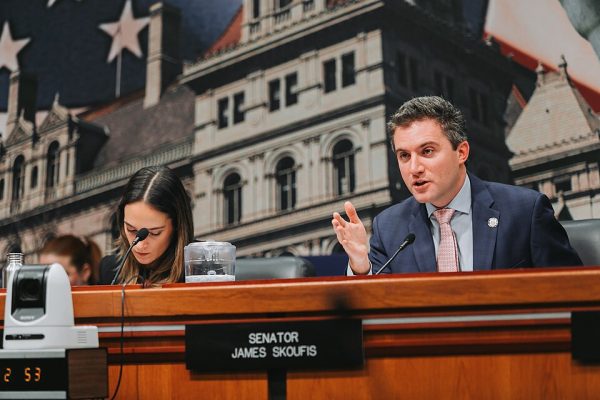
Others worry that the competition between New York, California, Georgia, and other states to provide breaks to film studios will lead to a “race to the bottom,” reminiscent of what occurred with Amazon HQ2. On the surface, Amazon HQ2 seemed like an opportunity to boost NYC’s local economy and benefit everyday workers. Amazon claimed the construction of its second headquarters would lead to 25 thousand new jobs. New York wanted Amazon’s HQ2 so desperately that it offered over $3.5 billion in state and city tax handouts. Giving Amazon, a company valued at over 2.8 trillion dollars, massive tax breaks is not a wise use of taxpayer dollars. After community organizers protested the massive tax breaks, Amazon decided to build HQ2 in Northern Virginia, which offered a similar package of tax incentives. Seven years later, Amazon’s promised economic development has yet to materialize. The Washington Post reports that as of the end of 2025, Amazon’s second headquarters has only created 7,159 new jobs. The same concerns about wasting taxpayer dollars apply to the film and television tax credit. Senator Skoufis worries that, “when states continuously try to outbid one another with larger and larger subsidies, there’s a risk of creating an environment where corporations hold disproportionate leverage over policy decisions. If a bidding war is a race to the bottom, the loser is the taxpayer.”
Many neighborhoods today are impacted by rising rents and an overall rising cost of living; issues that critics link, often directly, to increased film production activity. Public education, including specialized programs, facilities, and extracurricular opportunities at schools are all cut down and underfunded at the expense of New York’s film tax credits. For artists and young filmmakers, these underfunded programs, housing affordability, and the cost of living are a greater concern than any marginal benefit from the film tax credits given to major studios. “During a cost-of-living crisis, we have an obligation to examine whether taxpayer dollars are producing meaningful outcomes or simply padding corporate balance sheets,” observes Senator Skoufis. Mr. Spielberg worries that the high-cost of living, regardless of the availability of jobs, will cause talent to look for alternatives to NYC. “I’ve had crew members move to Portland, San Francisco, and even Japan for work opportunities. But that is less about better tax deals and more to do with the cost of the housing crisis in NY. However, if the production level drops in NY there is a genuine risk of that becoming a more widespread issue.”
As the song goes, if you can make it in New York, you can make it anywhere. While that sentiment certainly applies to the union workers and artists living in New York City, the same can’t be said for the film industries’ location options. New York City’s glamor and grit will always be a desirable backdrop for the film and television industry. Our tax dollars should fund programs which more directly impact the residents of New York City. After all, “Live from Atlanta, it’s Saturday Night!” just doesn’t have the same ring.