




There is a concept in psychology called “cognitive reappraisal,” which is the ability to reframe a negative experience in a way that reduces its emotional weight. It is considered one of the healthiest emotional regulation strategies a person can develop. Memes, without anyone designing them to do this, are essentially a mass exercise in cognitive reappraisal. A teenager who feels isolated in their anxiety, their grief, or their general sense of not fitting in can scroll through a thread and find hundreds of people expressing the exact same thing, packaged in a way that makes it feel lighter and less shameful. Memes work precisely because they strip away authority and social filters, using humor to deliver a message that anyone can receive and anyone can make. However, that same power has raised serious concerns about what teenagers are actually absorbing through all that scrolling, raising the question of whether memes are truly good for developing minds.
Memes are far older than most people assume. Richard Dawkins coined the term in 1976 in his book The Selfish Gene, using it to describe how ideas spread through culture the same way genes do biologically, mutating and adapting based on how well they connect with people. Early online communities in the late 1990s and early 2000s, places like 4chan, were the first breeding grounds for meme culture, where image macros and absurd humor spread through forums and email chains. By the time of the mainstream hold of Facebook and X, formerly known as Twitter, memes had developed their own grammar, inside jokes, and logic. However, memes do not hold good or bad values, they are simply a part of the times. It is up to the consumer to shape how they engage with them.
The Unification of Humor
With 74% of Gen Z reporting that they use memes to express thoughts they find difficult to communicate in traditional language, the format has become a genuine emotional outlet. In vulnerable communities where the preservation of a fading language, culture, or ritual seems to be impossible, memes made by teenagers who include these memes and cultural symbolism have formed a new way of protection over these cultures as those memes have shaped those languages as something of familiarity and home.
For Melanie Gamarra, a ninth grader at the High School of American Studies, memes have become a tool to maintain relationships. “I’ve used them a lot with my sister because she lives far away,” gamarra says. “By using memes it allowed me to stay connected to her in ways that were otherwise difficult.” Memes give teenagers a way to reach across distance, silence, and awkwardness and still get a feeling across, which is communication doing exactly what it is supposed to do. It uses mutual amusement as a way to intensify connectedness.
Memes have also provided a modern way of thinking. When a concept is introduced through a format already familiar to them, they start to click in their minds a lot quicker than traditional methods. Matthew Smithers, a history teacher of 15 years at Health, Arts, Robotics, Technology High School, has seen it reshape his classroom. “I often used to make my kids create memes from many topics, especially the French revolution,” he says. “You would be surprised how well they did. Lots of kids created memes about the third estate. It showed me that not only could they comprehend the topic, but also apply it to resources most recognized by them”
The Other Side of the Screen
The same qualities that make memes effective at building connections also make them effective at spreading damage. A format with no credentials, no accountability, and no filter can carry misinformation just as easily as a joke, wrapping dangerous ideas in enough humor to slip past a teenager’s critical thinking entirely.
Pete Sikora, climate and inequality campaigns director for New York Communities for Change, has watched this play out on a large scale. “The internet is awash in misinformation about climate. That’s no coincidence. Oil and gas companies and right wing interests push disinformation to influence public opinion and policy formation. They target voters as a whole as well as teens. It is really sad that people can get taken in. We don’t have the money to match up with those deep pocketed interests. Moreover, the platforms that should be removing disinformation content instead of spreading it are being irresponsible: they are profiting off of making people believe things that are not true.”
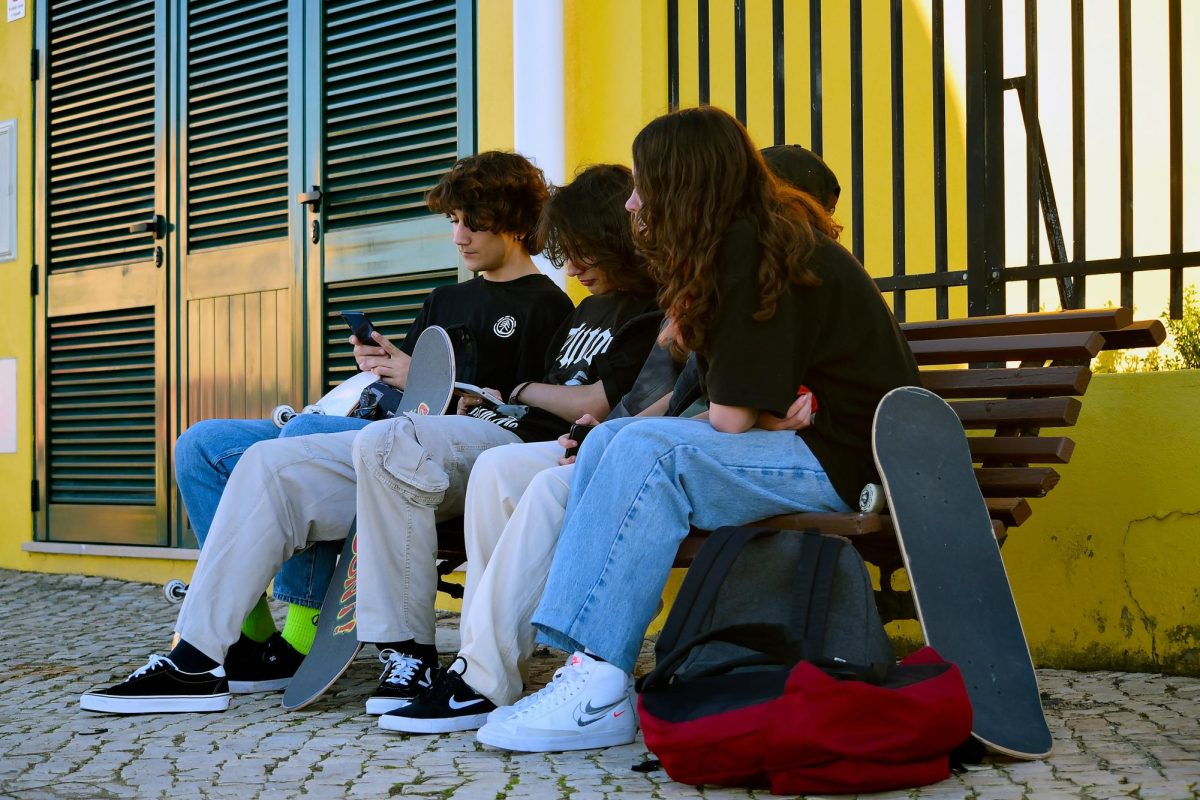
Lia Eustachewich, a managing editor for the New York Post, has noticed a related shift. “I truly feel like the art of speech and communication face to face is starting to become something of the past, in which many people are being stuck behind a screen,” she says. “It’s always, ‘look at this funny meme,’ not ‘hey, I miss you’ anymore.”
Jeff Rossbach, a student teacher and Hunter College senior, points to something subtler: desensitization. He compares it to his own teenage years playing ‘Call of Duty’. “I was very desensitized to the violence in those games because of my exposure to it,” he says. “It wasn’t until I was watching Saving Private Ryan that I really realized this is what they’re actually depicting. I think that’s a similar thing we’re seeing with memes. We’re making too much light of very serious situations, and it makes it harder for young people to determine what’s actually serious.” Rossbach connects this directly to teenage development. “Teenagers are only going to understand what’s presented to them, so everybody is extremely impressionable and very likely to respond in herd mentality.”
Misinformation, isolation, and desensitization just blend into the scroll until they’re indistinguishable from everything else..
The Balance Of It All
Memes are not going anywhere, and they are not inherently good or bad. The real work is building the kind of critical awareness that lets a teenager engage with meme culture without being quietly shaped by it. Seeing something is not the same as endorsing it, and laughing at something is not the same as believing it. That starts with media literacy, with teachers, parents, and teenagers themselves learning to ask better questions about what they are consuming and why. It means making mistakes and learning from them. What determines the outcome is whether the person scrolling has the tools to tell the difference between a joke and an agenda. And when done right, people can not only better themselves, just also the world around them.