


























There is nothing more humiliating to me than the control the humble smartphone has on the average person’s life. Today, our attention spans are continually likened to that of a goldfish, all by way of a colorful glass brick. Reading aptitude and critical thinking find themselves at risk in today’s America, as seen in, well, everything.
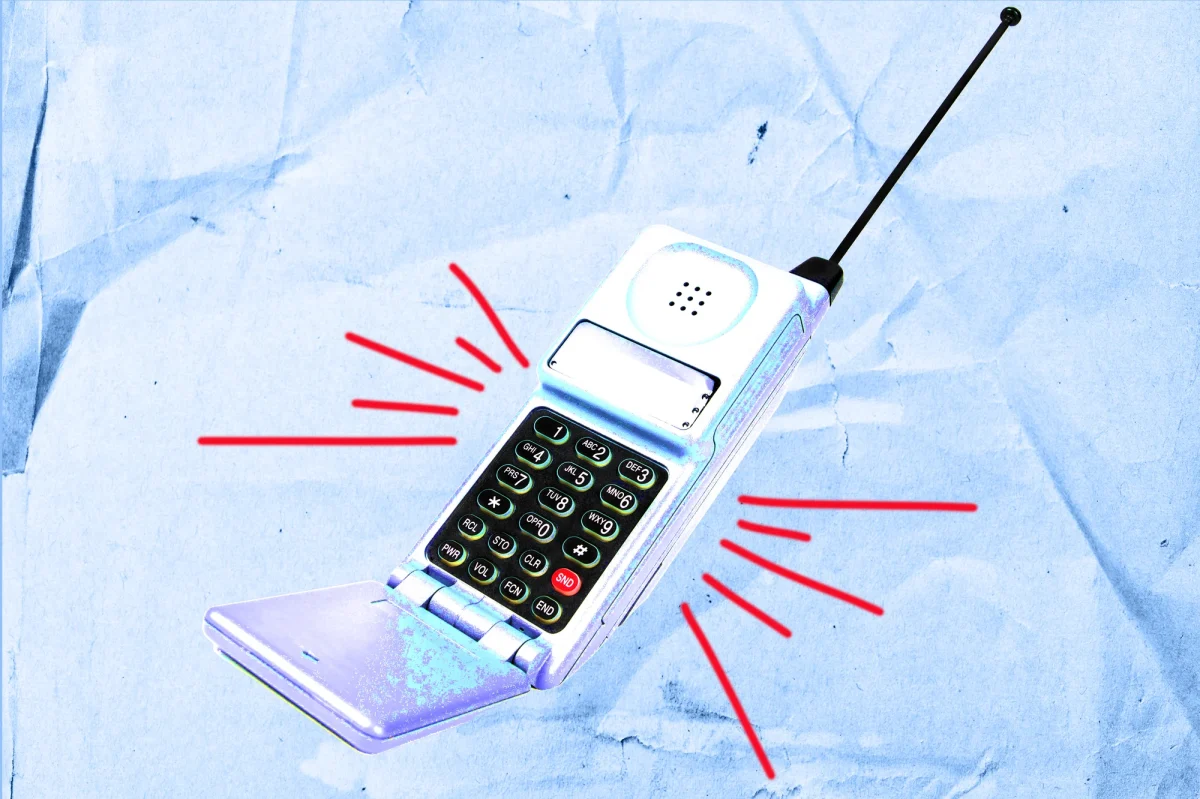
I believe there’s a valid case for the dumbphone: a deliberately “stupid” and functional phone meant to work as a tool, not a distraction. The modern smartphone adds a lot of value; it enables navigation, rapid communication, and easy access to the limitless trove of information that is the internet. However, these conveniences often force us to unduly prioritize the device itself, producing negative side effects.
Personally, in switching to a dumbphone, I anticipated better focus and a longer attention span, which the consumption of short-form content tends to hurt. I also wanted to be more in-the-moment, forcing myself to engage in a conversation rather than staring at my screen. And finally, I liked the idea of hanging up calls by flipping the phone shut.
The phone I went with was the CAT (yes, the construction company) S22 Flip. CAT actually makes several phones, mostly oriented toward blue-collar workers, but the S22 is the only one with a flip phone design. The CAT S22 is reasonably popular in the dumbphone community today due to its 4G support and robust build.
So, the positives: LTE is great considering most flip phones produced required 3G networks, which no longer exist in most of the US. The S22 also runs a lighter version of the Android OS, Android GO, meaning you can install typical Android apps provided the phone itself can run them. The battery life, especially at the low usage a dumbphone expects, is reasonably good, although I will say the battery saver mode does nothing. The phone, if you’ve ever seen me using it, is very bulky: it’s about twice the depth of a normal smartphone but three-quarters as wide. In other words, it’s a weird form factor that takes some getting used to. Finally, it’s replaceable. Coming in at around $120, even if it does somehow break, there’s not much being lost.
There are some drawbacks to the phone’s low price and simplicity, though. For starters, the camera is truly atrocious, with a 5-megapixel rear camera and a staggering 0.5-megapixel front camera. Often, it doesn’t even produce that trendy, digicam, Y2K kind of look. The pictures are just terrible. It can also take videos, but I wouldn’t recommend it. In typical Android fashion, it’s also very difficult to migrate your text messages from iOS. After quite a bit of teeth-pulling, I just installed WhatsApp and that has worked fine. One of the things I was most disappointed with, though, was the lack of a headphone jack. In 2026, even dumbphones don’t have headphone jacks! Absurd.
Adjusting to the phone wasn’t quite so bad, though. I noticed a lot fewer notifications, which surprised me because I’d had most of my notifications turned off on my smartphone, too. There was definitely some serious boredom. Waiting for the train, using the bathroom, or eating a meal was a lot more boring, but I knew that was the point. In time, I realized boredom wasn’t something to be scared of, and that it helped me process and organize my thoughts better.
I will concede that I found myself outsourcing a lot of the things I did on my phone to other devices. I no longer read on the Kobo app on my smartphone; instead, I purchased an XTEINK 4 as a tiny e-reader to replace that. Considering I no longer have any social media apps on my phone, I found myself using my laptop to access Instagram, Substack, or YouTube. I would say for the latter two, I felt more intentional in using them on my laptop because it was something I actively had to seek out as opposed to an automatic reflex.
I’m at about the four-month mark of having a dumbphone, and I’ve definitely seen the trends I mentioned in the last paragraph continue somewhat. I definitely experience more quiet and notice more of my surroundings when my phone isn’t constantly vying for my attention. I think my attention span has benefited, and I’ve found myself having a lot more reading stamina. One thing I remember about having a smartphone was pulling out my phone if I got bored while watching a movie or show. Now, I sort of have to pay attention, because there’s nothing more interesting on my phone. I also saw a bit less interaction with my friends than I did on my phone, but I’d say getting WhatsApp working and using Instagram on my laptop has helped remedy that.
All in all, there are probably some broader philosophical ideas I could pull from this. One thing that struck me was that modern life demands smartphones, with the world we live in increasingly built around the assumption that one has constant access to unlimited information. However, using the dumbphone has inclined me towards things I didn’t have to do with my smartphone. I have to plan ahead, because Google Maps is finicky on my dumbphone. I need to tolerate inconvenience and boredom, because my phone should be a tool, not a distraction. I anticipated a bit of exclusion or even some minor ostracization because of my dumbphone, but, in fact, I’ve experienced the opposite. I feel more comfortable with myself and others because there’s no longer a phone between me and social engagement with another person.
Maybe a bit of inconvenience is necessary to make us realize what matters and what doesn’t in our lives.
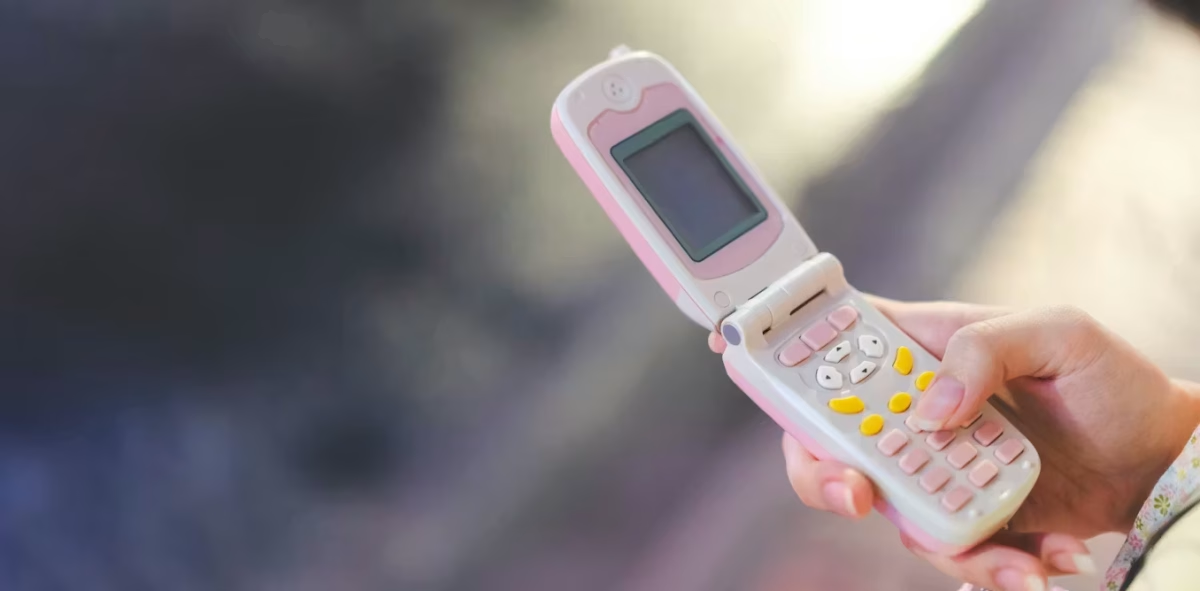
So, should you switch to a dumbphone? I’d like to tell you yes, but there are some caveats.
YES, if:
- You’re a heavy social media user.
- You find yourself unable to focus on important tasks.
- You find yourself using your phone to avoid social engagement or boredom.
- You’re willing to try a new lifestyle for a bit.
NO, if:
- All of your apps need to function at 100%.
- You’re constantly on the go and you need a fast maps app.
Going forward, I don’t see myself switching back to a smartphone anytime soon. My smartphone is in a drawer in my apartment, and I haven’t pulled it out since I turned it off last December. While using the dumbphone on a day-to-day basis can certainly be irritating, that’s sort of the point. As I’ve said, if my phone isn’t more interesting than anything else going on around me in real life, then it’s doing what it’s supposed to.
I think changing my relationship with the most significant piece of technology in my life has changed my outlook on technology as a whole. And this new outlook is waiting for you, too.
And so, dear reader, the case for the dumbphone.