









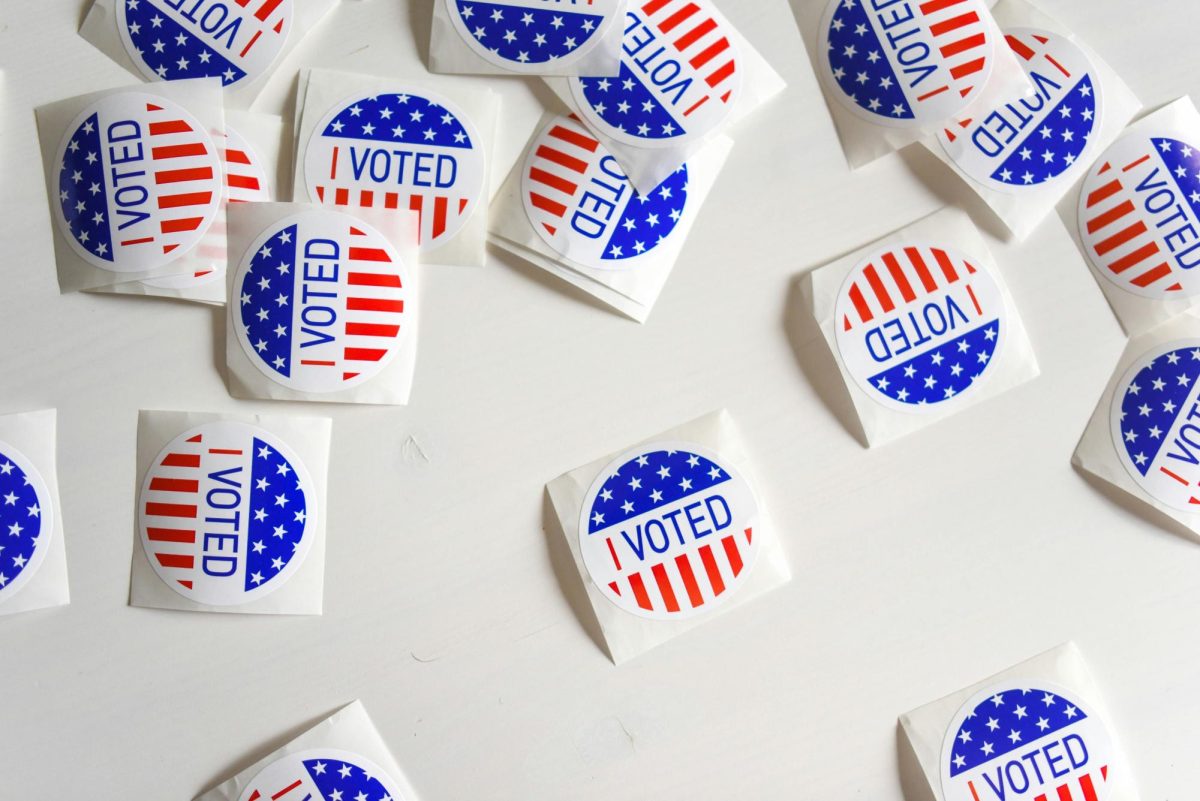
Religion has played an important role in American ideology, and it is consequently influencing how people form their political beliefs and what candidates they should vote for. Although the United States was founded on the idea of the separation of church and state, recent studies have shown that religion and faith have been an essential guide for Americans in the voting booth. This is an informative topic because it will show an aspect of the country’s divide and how polarization increases.
According to a May 2025 Pew Research Center survey, religion has a direct influence on voting behavior for a sizable minority of Americans. About 25% of U.S. adults say religion shapes how they vote “a great deal” or “quite a bit,” while 56% say religion influences their vote “a little” or “not at all.” Interestingly, religion plays a much stronger role in shaping morality than in shaping politics. Pew reports that 56% of Americans say religion strongly affects their moral decisions, and 59% say it influences how they treat others. These statistics highlight that the foundation of morality can be based on faith, indicating that people can or cannot be affected by religious beliefs.
An Islamic leader stated that the voting behavior in Islam is not a uniform type of decision, which shows the multitude of complexities that are visible in muslim communities. “The masjid has groups that vote with religion, other groups that vote without the influence of religion, and some other groups that balance both, and they think it makes a difference,” he said. He also mentioned that Muslims want to find a balance between religion and politics to ensure that there isn’t necessarily one over the other, stating, “There are moderate Muslims that balance both ways when it comes to politics and Islam. Our God, Allah SWT, words in the Quran state that everything is mixed.” This showcases that religion can have an influence or can be a guide when it comes to politics, indicating how religion can influence politics.
One of the clearest ways religion shows up in political life is through differing views on lawmaking and national values. Among supporters of former President Donald Trump, religion influences politics at a much higher rate. Pew found that 69% of Trump supporters who aren’t all republican voters believe the Bible should have at least some influence on U.S. laws, with 36% saying it should have “a great deal” of influence. Even more striking, 45% of Trump supporters say that if the Bible and the will of the people conflict, the Bible should take priority. This showcases that for many voters in the United States, they believe religious belief has more of an influence than democratic ideologies or national policies. While many Americans don’t solely vote due to religion, it is clear that religion and faith have an impact that can create distinct views and ideologies for people who don’t vote because of faith and people who vote because of faith.
Religion also plays a significant role in how Americans evaluate the character of political leaders. A nationwide Pew survey in 2024 revealed that 94% of Americans believe it is “very” or “somewhat” important for a president to live a moral or ethical life. Additionally, 48% say it is important for a president to have strong religious beliefs, even if those beliefs differ from their own. Consequently, the recognition is exemplified amongst voters who believe that religion should be reflected amongst leadership. Political analysts also mention that voters create distinctions between policies and then their character and the traits that come with character.
In New York, one of the nation’s most religiously diverse states, religion interacts with politics more diversely. According to the Pew Research Center’s Religious Landscape Study, about 60% of New Yorkers identify with a religion, while 40% identify as atheist, agnostic, or “nothing in particular.” Since New York is a diverse state with many different religions, including Islam, Christianity, Judaism, and other non-religious communities, the behavior of politics is more varied and not tied to any particular religious identity. Furthermore, New York exit polls such as the AP VoteCast and Edison Research also highlight that religion does influence voter turnout and political redirection.
A Jewish community educator, Alexa Gutterman, indicated that religion can influence politics because of the identity that the person grew up with. “Many members of the Jewish community usually vote based on affiliation with Israel, which they see as the Jewish home state,” the leader said, also mentioning that support for Israel does not always indicate that a Jewish person supports the leadership and policies. The leader also helped explain the values of a Jewish person, stating, “The Jewish faith emphasizes fairness, equality, and doing the morally right thing… Jewish voters tend to want to vote for people who show morally good judgment and look out for all, not just some.”
In addition, people would rather focus on the safety of their communities when it comes to evaluating certain candidates. The Jewish educator mentioned that when it comes to issues around certain races or their own race, Jewish people would mostly look at policies to ensure that there isn’t unequal treatment or discrimination against a certain race, further stating, “many of the concerns raised about Mamdani’s mayoral race are about looking out for Jewish people during times of high hate crime and antisemitism.” This exemplifies the idea that concerns about immoral issues are also tied to the idea of voting behavior and how it can influence communities that want a safe environment.
Similarly, the Islamic leader gave insight into the perspectives when it comes to Zohran Mamdani’s candidacy, further explaining the idea that religious identity doesn’t always mean political power is shared. “When it comes to Mamdani and politics, no person can be mayor until someone puts him there. It is a game,” he said. He added that some people are more sentimental because of Mamdani’s candidacy and religious identity. “Mamdani being Muslim and the democracy makes us Muslims seem we have power when we really don’t.” These perspectives help explain the idea that religious identity does not always give people the same satisfaction as it does to other people, and how political power isn’t always given.
Experts and religious leaders often note that the connection between religion and politics is not necessarily good or bad; it is simply powerful. On one side, religion can increase the sense of motivation, compassion, and responsibility a person indulges in. Many faithful leaders also mention that religion can encourage voters to delve deeply into certain issues, such as human rights. However, political analysts mention how religious influences can be detrimental because people might prioritize religious beliefs over democratic principles, and this can increase polarization as well.