

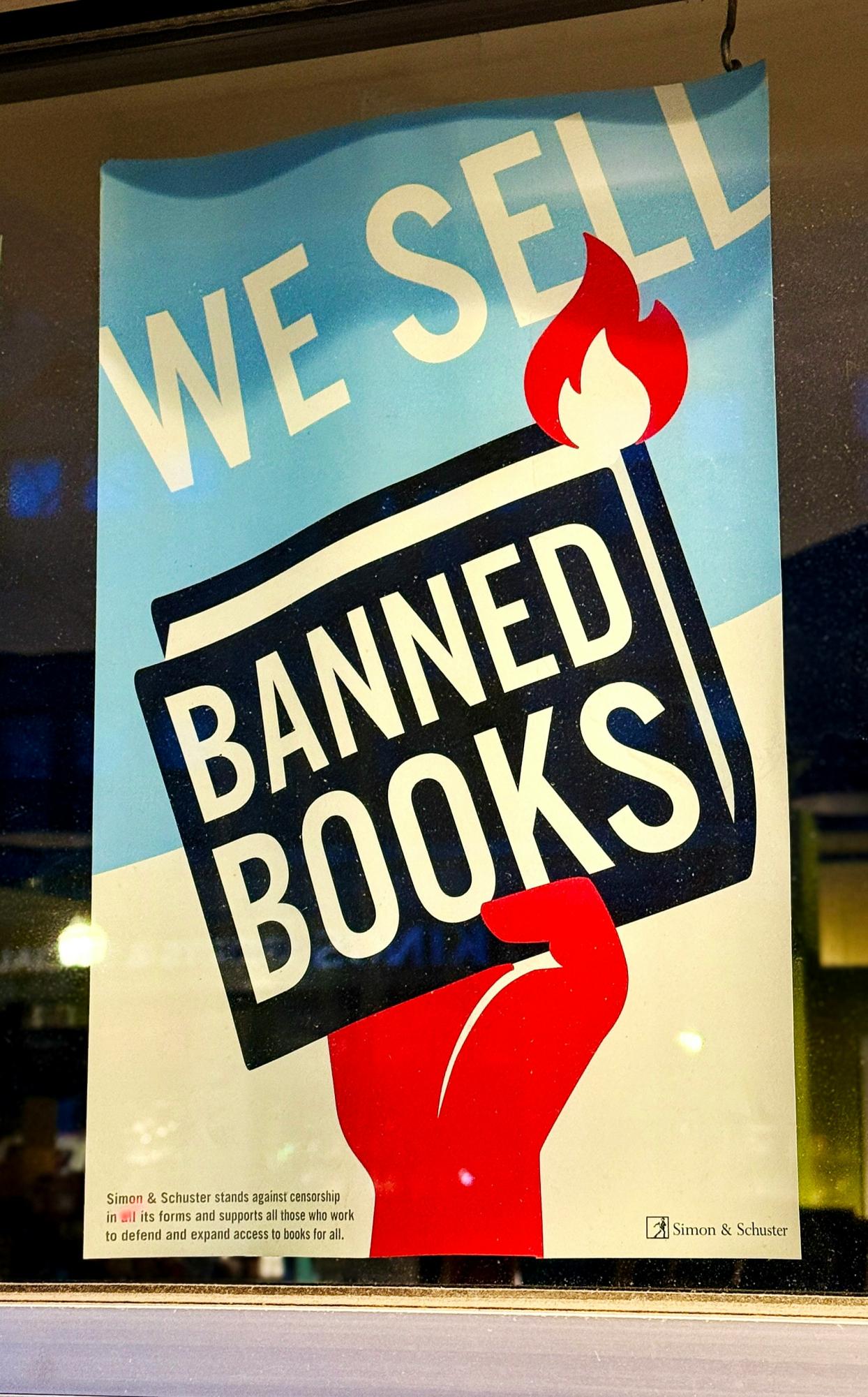
The Lorax. 1984. The Magic Fish. The Handmaid’s Tale. Shopgirl. Harry Potter. Maybe you’ve read some of them. Maybe you’ve never heard of them. They all have one thing in common: they’ve been banned or challenged in countless states across America.
In today’s shifting political landscape, banned books have been used as a tool to silence voices and perspectives. But how does a book actually get banned? How can a book be banned from public libraries and schools, removed from shelves?
Most book bans begin with formal challenges–requests filed by parents, advocacy groups, or organizations–which are then debated in courtrooms or reviewed by committees. These battles over books are long and tiresome, involving parents, lawyers, school boards, and state governments. Over time, repeated challenges to books voicing certain perspectives create a chilling cone of silence over those who need to be heard.
“What started in Llano with pearl-clutching over Freddie the Farting Snowman has now resulted in a free-for-all pass for unencumbered suppression and removal of any and all books from public libraries. That is the logical endpoint for censorship, which is why it must be confronted loudly and unequivocally,” said Liela Little during the Little v. Llano court case.
Inside the small town of Llano County, Texas, a group of residents objected to books in the public library that addressed themes of sex, race, and gender. A lower federal court ruled that the removal of these books was not unconstitutional, allowing the bans to continue. However, the residents pushed for the case to be considered by the Supreme Court. Unfortunately, the Court ultimately refused to hear the case.
The Supreme Court’s refusal to consider Little v. Llano set a dangerous precedent for the future of book bans. Sam Helmick, president of the American Library Association, warned that the Supreme Court’s decision “threatens to transform government libraries into centers for indoctrination instead of protecting them as centers of open inquiry, undermining the First Amendment right to read unfettered by viewpoint-based censorship.”’ The Supreme Court did not outright say it was okay to ban books, but instead sent a signal. A signal that bans can and will go unchallenged in federal courts. A signal that books can be removed based on ideology rather than educational value. It opened the floodgates for more book bans.
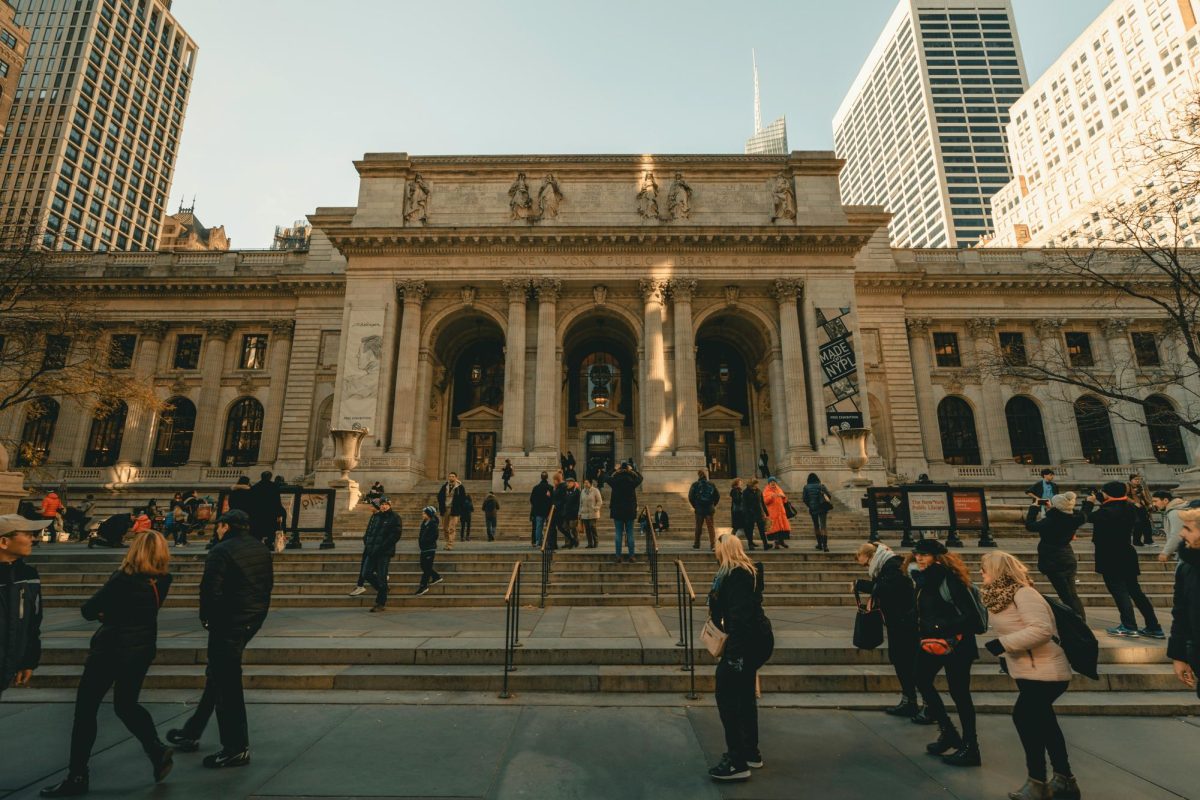
An interview with a public service representative from the New York Public Library highlights how book bans affect the New York Public Library. Book bans go against the Library system’s central mission of keeping books on the shelves. The representative, who preferred to remain anonymous, explained that, “NYPL gets requests to remove books from shelves that they find objectionable. It’s rare that they actually do get banned since the library serves a very diverse population.” People understand that books are necessary to express a wide range of viewpoints, and the NYPL supports this.
The representative elaborates that, “we won’t allow one person’s opinion to block other people’s opinions. We don’t take books off the shelves. Our library doesn’t believe that censorship is a good idea or something fundamental to human values, finding it important to make that known, and NYPLs position is that no book should be kept out of libraries.” The library remains firm in its stance against book bans, even with the recent push for restrictions across the country.
While a nationwide book ban would violate the First Amendment, people have found a loophole: books can be banned in public institutions like schools. In public schools, books are most often restricted through challenges filed within the education system. These challenges are reviewed by committees, which evaluate books based on criteria such as sexual content, age appropriateness, and depictions of violence. For the New York Public Library, review boards consist of volunteer librarians who not only decide which books should be removed, but also plas library events like Banned Books Week to fight against censorship.
The question of book bans cannot be brought up without also bringing up the First Amendment. In the constitution, the first amendment is defined as “Congress shall make no law respecting an establishment of religion, or prohibiting the free exercise thereof; or abridging the freedom of speech, or of the press; or the right of the people peaceably to assemble, and to petition the Government for a redress of grievances.” This essentially means that the government is not allowed to make any laws restricting freedom of speech.
Another court case in April of this year that touched upon this issue was Roe v. Rutherford County Board of Education. In counties across Tennessee, over 145 books were restricted or banned in the library system, based on criteria decided by individuals with ties to Moms for Liberty, a far-right group known for advocating for conservative parental rights. These books were banned for having stories about LGBTQ characters and discussions about race and gender, among other things.
Plaintiff Rachel Roe, a rising freshman in high school who participated in the lawsuit under a pseudonym, said, “I noticed that many of the removed books involve stories about LGBTQ characters or tell stories about racism or the experiences of non-white authors growing up in America. I think it is wrong to remove these books because I think that books in a library should represent everybody.” This represents a clear stance on book bans, where even in counties where book bans are very popular, there is always someone fighting for the other side, someone who goes against the common viewpoint. These ideas of representation are particularly relevant to children, who are growing up and developing independence. When children don’t see their identity represented in the media around them, childhood becomes a very different world. It becomes isolation. It becomes loneliness. And most of all, since you learn the most new ideas as a child, you carry these feelings of representation into your future for decades.
A contrarian. You may be a contrarian when it comes to pineapples belonging on pizza, wearing socks with sandals, or if reality TV is truly reality. But a contrarian isn’t just limited to these topics: it’s simply anyone who opposes or rejects popular opinion. In the realm of books and bans, being the contrarian depends on your location, the people you surround yourself with, and your environment. For Rachel Roe, she was a contrarian who was against book bans. For Tiffany Justice, she was a contrarian who was for book bans. She is the co-founder of Moms for Liberty, where she fights for parents rights when it comes to book bans. In recent years, they have gained influence across America, developing chapters in many major cities. Right here, in Forest Hills, Queens, lies a Moms for Liberty chapter founded by Elena Chin. What’s more important than their locations is their reach. How their ideas have spread across America, caused change in state governments, passed laws, and gotten support of many Republican governors and even the President.
From the perspective of members of Moms for Liberty, they are protecting the people. According to the mission statement from their website, “We are dedicated to fighting for the survival of America by unifying, educating and empowering parents to defend their parental rights at all levels of government.” For many, their work reaches beyond banning books. It goes as far as to banning viewpoints. According to an article from CNN, “Moms for Liberty, founded in 2021, expanded its mission to include efforts to ban certain books from schools, outlaw the teaching and discussion of gender and sexuality by teachers and halt the teaching of critical race theory.” Many believe they want to restrict books on the grounds that parents should pick what their kids hear and learn. They are not just banning books, they are banning certain viewpoints. Ones they don’t like and ones they don’t agree with. Whether you agree with Moms for Liberty’s mission or not, we live in a world where everyone should have access to every viewpoint.
Everyone can access these different viewpoints and one way of this is through bookstores. Melissa, a manager at Barnes and Noble on 5th Avenue and 46th st, elaborated on this idea. She believes that reading banned books is important because, “you don’t know what you don’t know,” and reading books on different perspectives helps you learn and understand more. Learning about different viewpoints and perspectives can help someone learn and interact with the world around them, and grow their own ideas and opinions. Melissa states that the most important things to do to combat book bans are to read more books, educate yourself on book bans, and to protest against them where the decisions are made, like at the courthouse.
When asked if people ever request for books to be removed from the store, she replied, “People don’t do that. That’s not how it works and stores don’t make decisions. The state decides what books get banned, not companies.” Although public libraries and for-profit bookstores are very different industries, a recurring theme appears. The state decides what books get banned, the lawyers fight against the state for rights, Moms for Liberty gained power through the state. And to many, the answer to how book bans end is the state. They make the decisions, not the people. You can’t change those decisions. This idea, little by little, is disproven. Every student, every librarian, every author fighting for change in how book bans work is influencing the state.
Nadine Strossen, a legal expert in the first amendment and former president of the ACLU wrote in her book ‘Hate: Why We Should Resist it With Free Speech, Not Censorship’, that “more speech can be the best way to reach out to individuals, changing what they think and not merely what they do.” She emphasizes that the way to combat hate speech is not more censorship, but to create spaces that facilitate meaningful discussions, not ban those discussions completely. Banning books takes away perspectives on sometimes uncomfortable topics that people don’t want to face, creating a circle of silence on important topics such as race and gender.
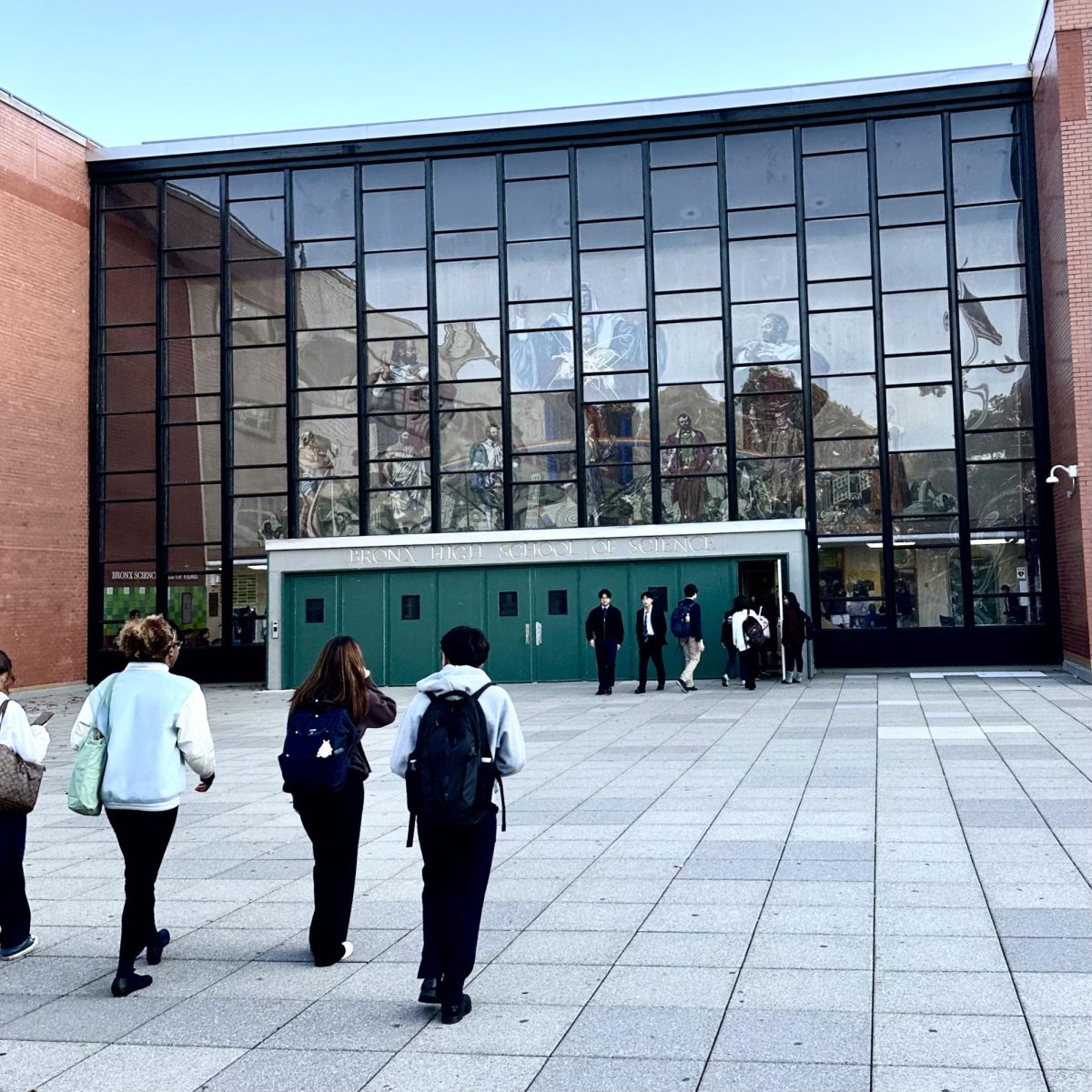
Ritika Ramaswamy, class of ‘28, a student at the Bronx High School of Science, shares her views on book bans and what people can do to combat them. “I think it’s really important to be able to learn about different perspectives and voices on a topic,” Ritika says. “It helps me understand all the different sides and get a better understanding of the topic.” When asked if schools and libraries should ban any books, she said she “doesn’t think books should be banned, especially if teachers and librarians are there to guide students through reading a more difficult book or topic. All it really does is limit the perspectives and information accessible to me and other kids.”
As debates over book bans remain rampant, one truth remains clear: censorship does not protect society from harmful ideas. Instead, it shields people from understanding them. And in doing so, it narrows the very freedom that libraries, schools, and the First Amendment were designed to protect.