



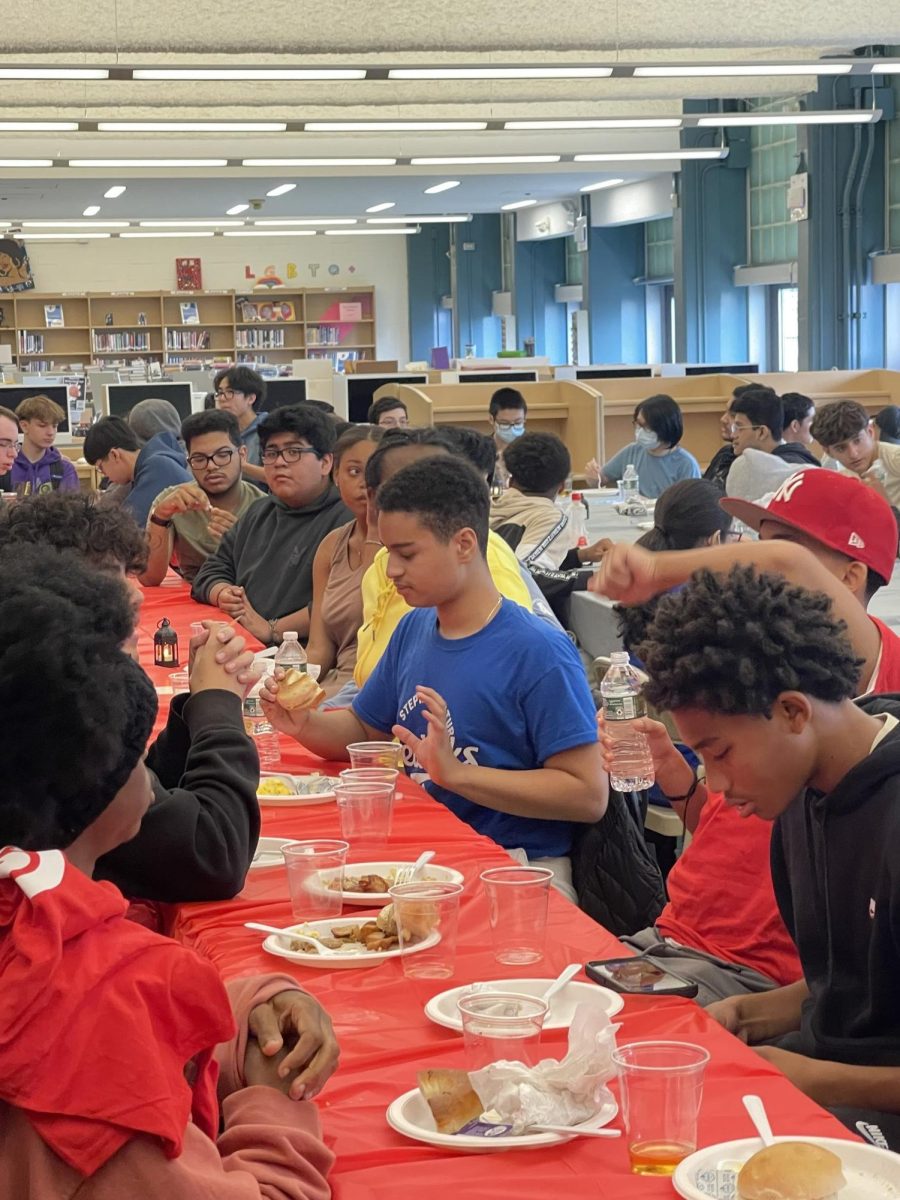











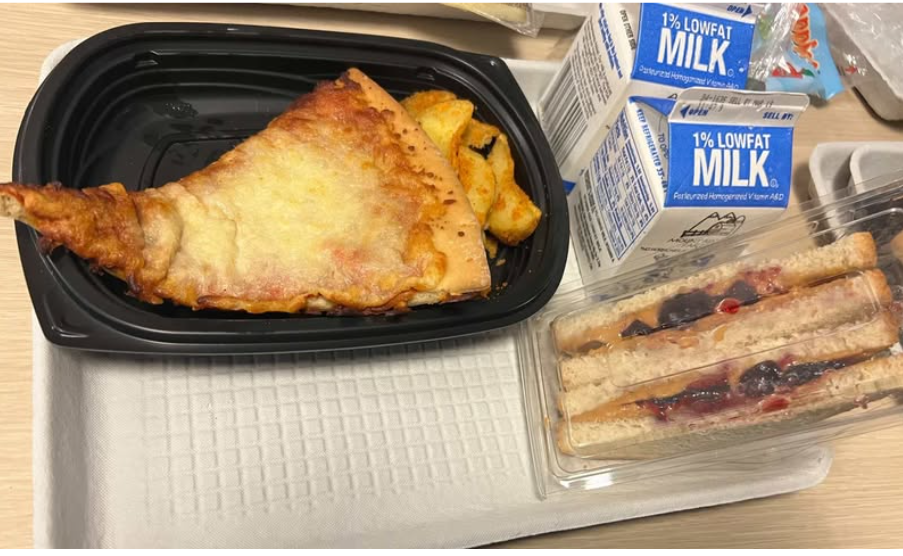
A lunch schedule is posted on the cafeteria wall at John Dewey High School, listing what meal is supposed to be served each day.
In theory, this schedule helps students know what to expect when they step into the lunchroom. In reality, many students say they did not even know the schedule existed. However, many students were unaware of the schedule and unsure whether the cafeteria follows it.
The posted menu is meant to provide structure and variety. Each day has its own planned meal, along with daily options such as PB&J’s and other quick choices.
“No, I did not know about any school lunch schedule. I’m not really seeing much of a variety of foods daily.” Pyoe added that he assumed there was no official plan at all. “I was not aware of a schedule, so I didn’t believe there was one,” senior Sai Mon Pyoe stated.
Other students shared similar reactions. While the schedule may be clearly posted, it does not seem to be widely noticed. Moreover, students also expressed concerns about limited meal options.
One student said they rarely find food they truly enjoy and often choose the same meal over and over again.. “Yes, I rarely find food I like, and I usually end up getting the meal that I’m used to the most, which is the chicken with fries,” one junior at Dewey said.
This repetition suggests that even if the menu changes on paper, students may not feel that the variety is meaningful.
If many students are choosing the same meal each day, it could point to a gap between what is offered and what students actually want to eat.
Additionally, some previously available menu items appear to have been removed. “I like eating chicken thighs and dumplings, but the dumplings have been discontinued or something because I have not seen them in the lunchroom for a while now,” the junior shared. The absence of certain meals may further limit students.
To better understand the issue, The Dragon’s Den reached out to school administration for clarification. Principal Adelle said she was unaware that the cafeteria lunch had inconsistencies between the DOE website, the cafeteria wall schedule, and the meals actually being served.
When informed that all three sources—the DOE website, the posted cafeteria schedule, and the lunch staff’s internal schedule appeared to be out of sync, she expressed genuine surprise.
“This is new information for me,” Principal Adelle said. “I need clarification just like you. It’s something I now have to look into and start asking my own questions about.”
According to cafeteria staff, the schedule they receive comes directly from the DOE. They explained that unexpected events—such as holidays, special events, or emergency closures can disrupt the planned menu. The recent snow day following Blizzard Hernando, for example, caused the kitchen to fall behind schedule, forcing them to adjust meals on the fly.
Lunch staff at JDHS added that unexpected holidays or events can cause the lunch schedule to be out of order.
The lunch on Monday could be served on Tuesday as they have to use the materials they prepared on Monday so that nothing goes to waste “We may use ingredients of Monday on Tuesday due to the holiday on snow day. Because our stuff is already prepared for Monday. So we’ll use Monday’s pizza for Tuesday,” a cafeteria employee said.
For the Principal, It’s not just a matter of inconsistency. Ms. Adelle emphasized that predictability matters in students’ daily lives.
“Everyone prepares their day around certain things—bus schedules, train schedules, even what they plan to eat,” she further added. “Nutrition is part of how students stay healthy, focused, and strong. If they’re anticipating one thing and get something completely different, I can understand how that disrupts their day,” Principal Adelle said.
Despite this, she noted that no students had previously brought concerns about lunch inconsistencies to her attention. “This is the first conversation I’m having about it,” she said.
The principal agreed that this lack of transparency is problematic. She suggested that one solution could be involving students more directly in the process.
“One idea is to start a monthly feedback survey through the student council,” she said. “Students could share what they enjoyed, what they want to see added, and what they think should be removed. We could then escalate that feedback to the Office of Food and Nutrition.”
She emphasized that giving students a voice could help bridge the gap between what is offered and what students actually want to eat.
While the root of the scheduling inconsistencies remains unclear, the administration expressed a willingness to investigate and improve communication.
“I would love for students to have more understanding of what they’re eating every day and what’s coming their way,” the principal added. “That’s something we can work on.”